Eligible German account owners
Paid-plan customers entering account closure, with access to Starter and authority to change the plan.
I built and shipped a retention flow that gave eligible customers in Germany a lower-cost way to keep their account.
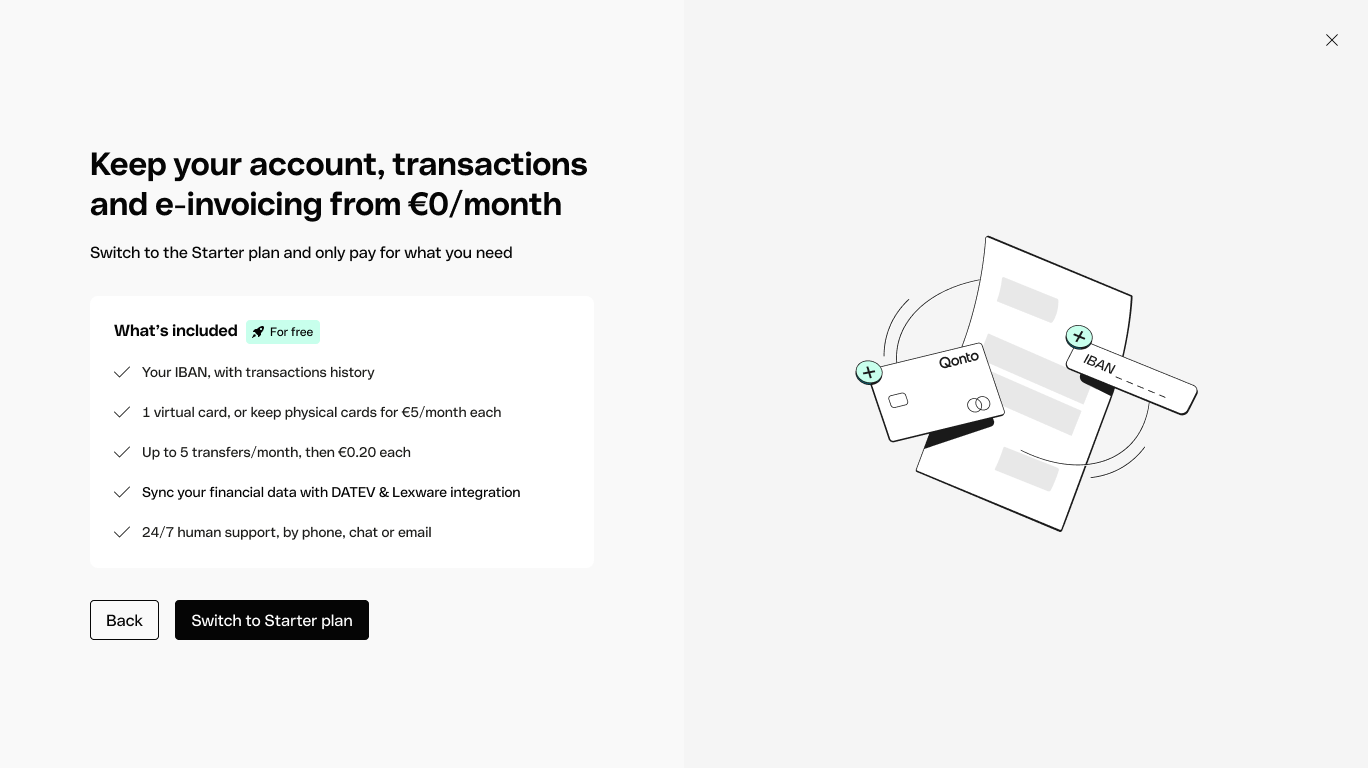
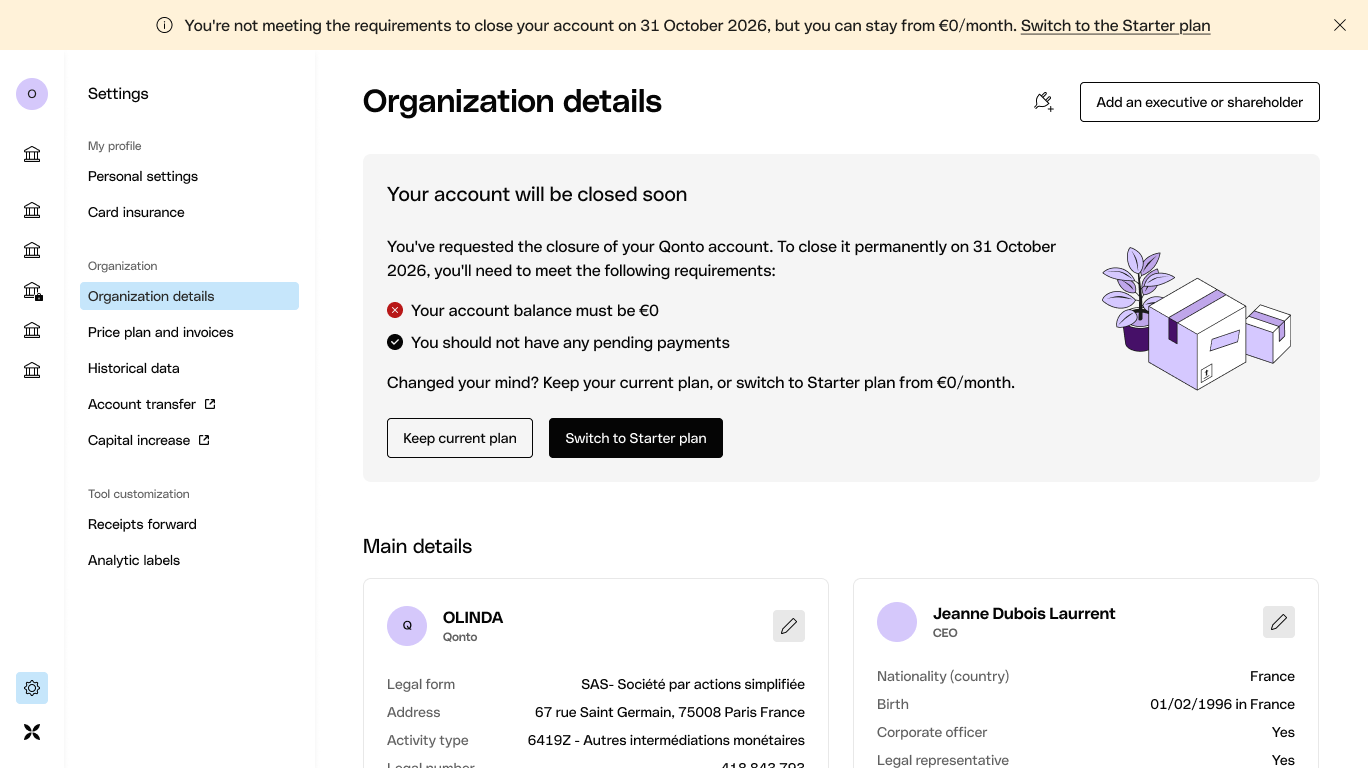
The desktop retention proposition shown during account closure.
Context and role
The team introduced Starter as a lower-cost option for eligible German customers. I translated the proposition into a reliable web flow inside the existing account-closure journey.
Paid-plan customers entering account closure, with access to Starter and authority to change the plan.
Starter kept the account, history and invoicing available, with usage charged per transaction.
I owned the web flow, states, technical design, implementation, instrumentation and launch review. The Product Designer owned visual direction.
Discovery and framing
I worked from the live closure journey, account state, eligibility rules and release checkpoints. Together, they defined when the offer was relevant and what the flow had to protect.
How should Starter be offered without creating a closure record too early, repeating an unrelated downgrade journey or showing contradictory account states?
The problem
Price was driving some customers to close a useful account.
The existing flow offered two choices: keep the paid plan or close the account. Starter let eligible German organisations keep their history and invoicing with a €0 monthly subscription and pay per transaction.
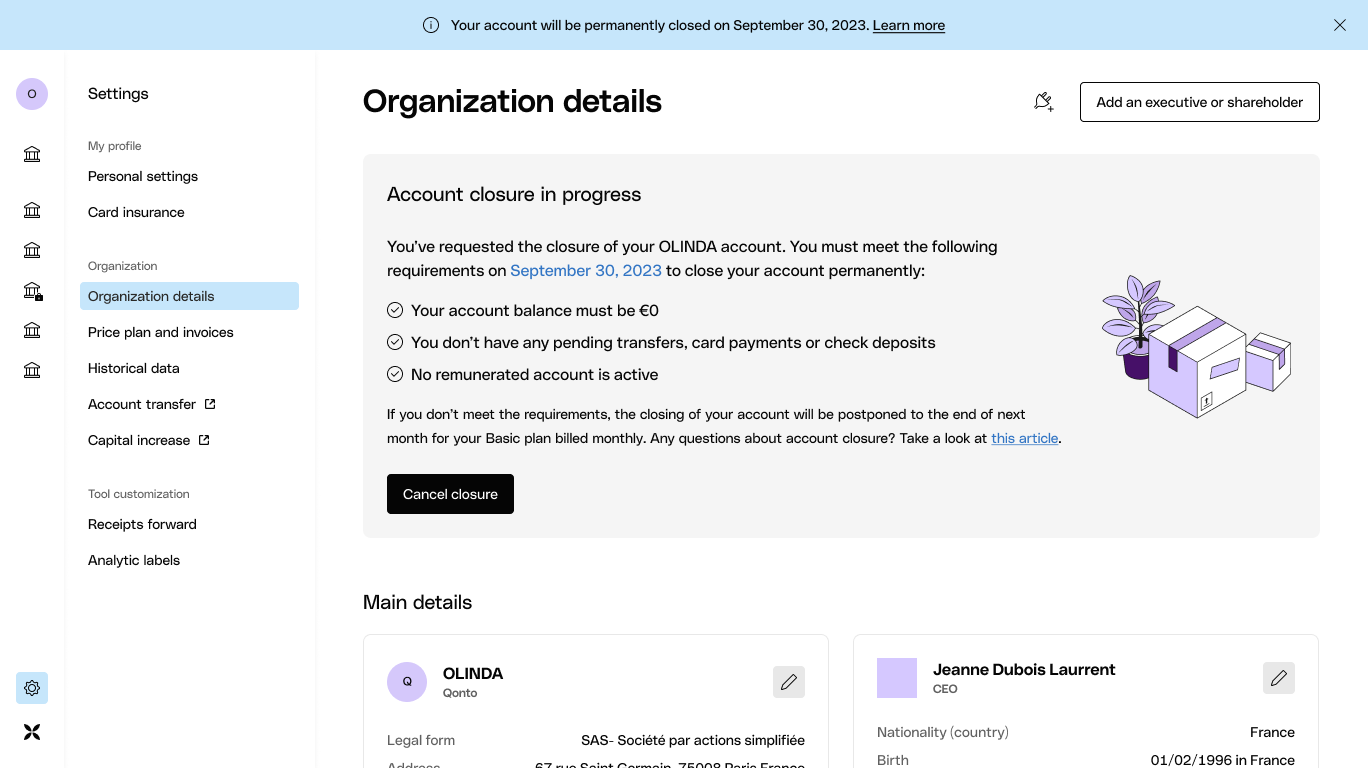
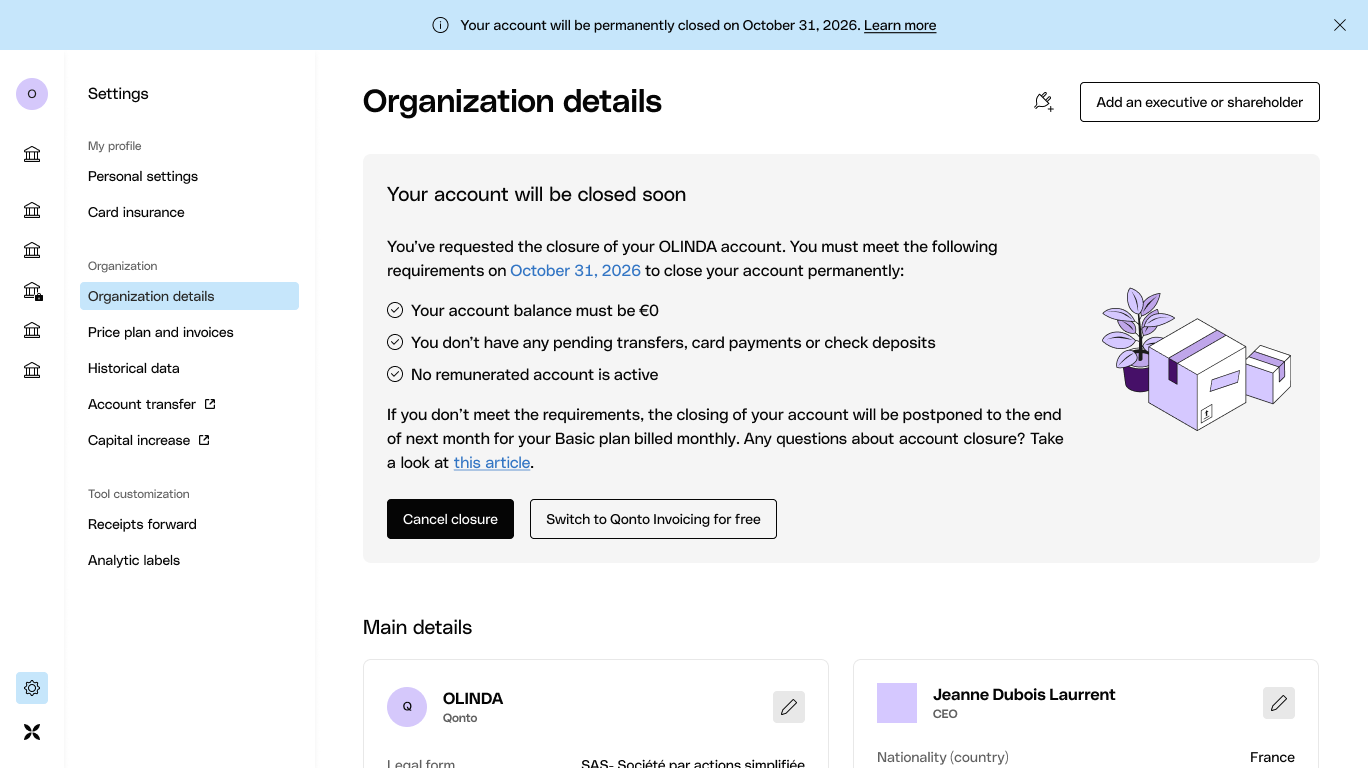
The flow evolved from account closure, to an adjacent offer, then to a relevant plan alternative.
Three decisions
The account states were the real design problem.
I focused on the accept path, account history and one eligibility rule shared by every placement.
Decision 01
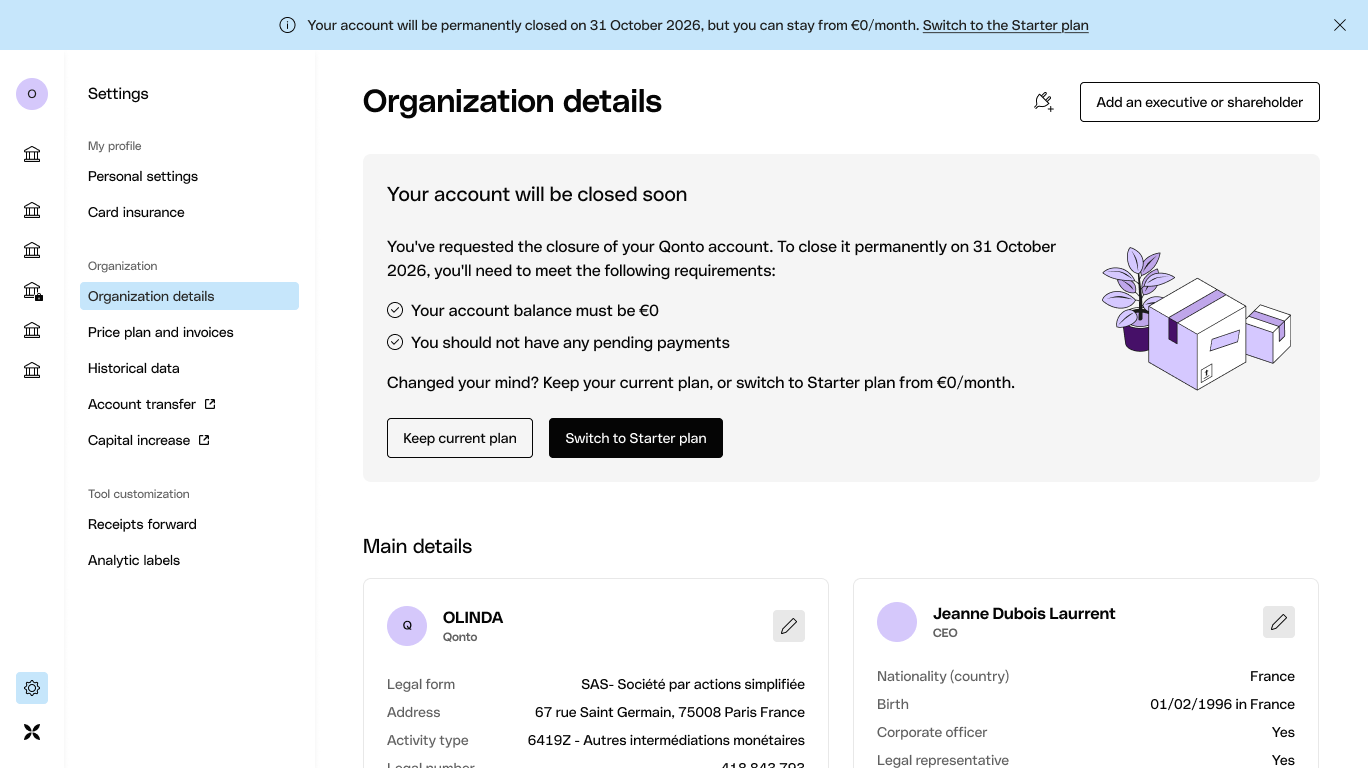
Acceptance started the plan change and kept the account open. Declining continued the existing closing path.
Creating then cancelling a closure would leave a reversal in account history and trigger departure systems.
The closure only existed after the customer chose to continue leaving.
Decision 02
The offer had already selected Starter and explained its conditions, so this entry path went directly to confirmation. Other plan changes kept their existing journey.
The optional shortcut changed this entry path; every other plan change kept the shared flow.
Decision 03
Because closure could span several sessions, every surface checked the same conditions and release switch.
The shipped experience
The Starter path remained available across sessions while the banner reflected the current closure state.
Release validation
Three release signals guided the follow-up.
I reviewed early adoption, the D+28 promo checkpoint and engagement by placement. The cohort was small, so I treated the figures as launch signals.
The conversion signal supported the proposition. The post-login modal remained the strongest measured placement, while the organisation-page banner needed removal, relocation or a new treatment.
The offer converted, while the organisation-page banner received no clicks.
fin.
The Product Designer led the visual direction. I led the web technical design, implementation and analysis. Percentages are shared with permission. Customer data and cohort sizes remain omitted.