Needs the policy beside the work
Reviews valued a shared source of truth, clause search, version history and workflows that replace scattered email threads.
Independent B2B concept
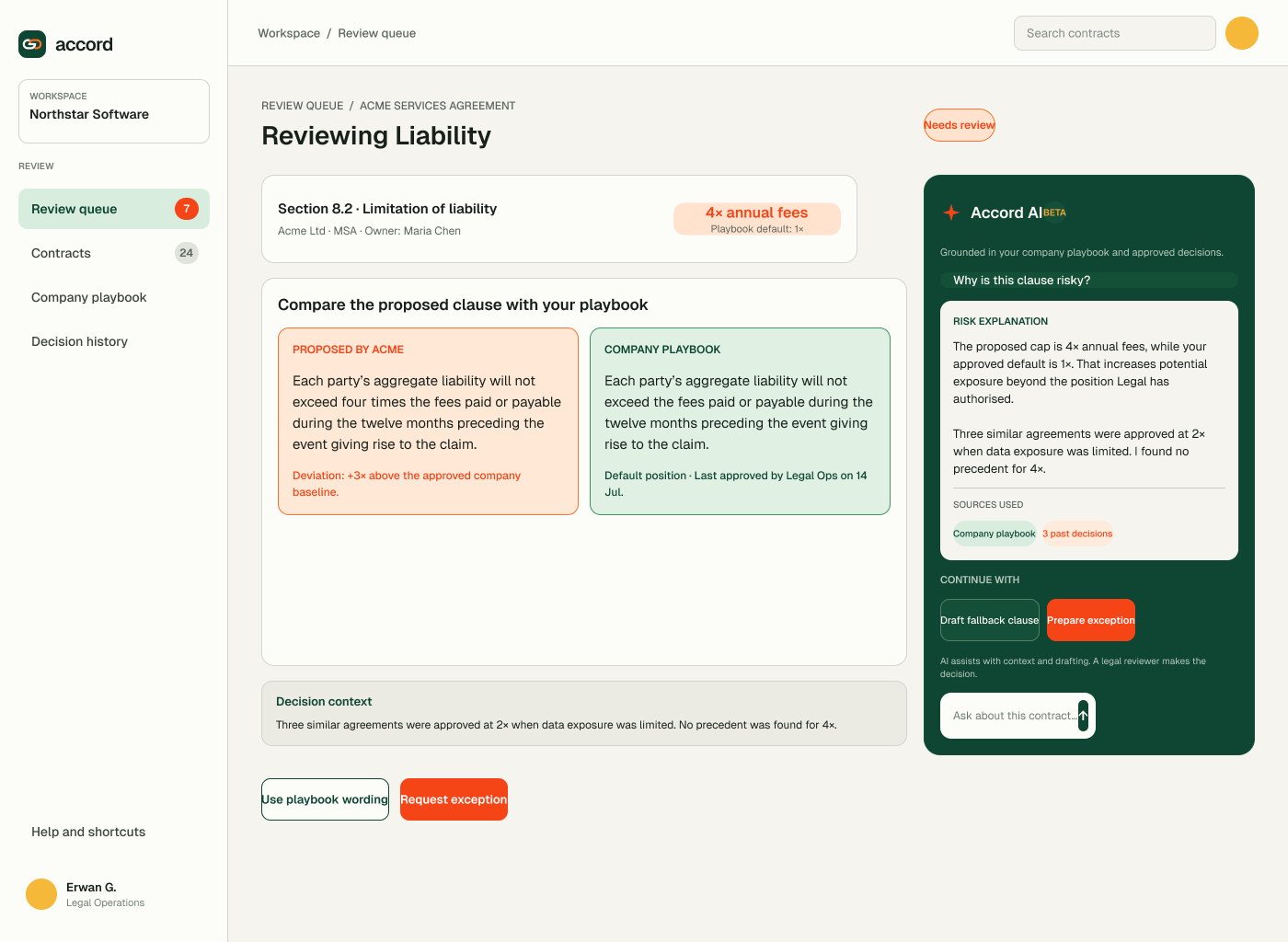
I designed a desktop concept that helps reviewers compare a clause with company policy, prepare an exception and record the final decision.
Why this problem
I narrowed the concept to clauses that break company policy. The reviewer needs the clause beside the playbook and any useful precedent. They also need the business rationale and the right approver.
Context and role
As the solo product designer, I owned the desk research, problem framing, workflow, interface and prototype. The first idea covered AI and contracts in general. Research narrowed it to policy exceptions.
Research 01 · Public practitioner evidence
I read a sample of recent practitioner reviews across Ironclad, Juro and SpotDraft. Their review pages contained 664 published reviews at the time. The sample helped me find recurring workflow needs. It does not estimate prevalence.
Reviews valued a shared source of truth, clause search, version history and workflows that replace scattered email threads.
Visibility reduced repeated messages between legal and commercial teams. Structured intake made missing context visible earlier.
Approval routing, activity logs and clear ownership mattered because the decision had to remain traceable after signature.
Research 02 · Product benchmark
Across the three products, the common pieces were a playbook, a named approver and an audit trail. I built the prototype around that handoff.
Keep policy and the clause connected. Make the approver explicit.
Ironclad documentation ↗Expose the basis of the recommendation and keep acceptance human.
Juro product update, March 2026 ↗Make status and re-review visible throughout the workflow.
SpotDraft documentation, January 2026 ↗Problem framing
Desk research showed that the clause and policy had to remain together. The workflow also needed a named owner and a durable record. The exact role split and handoffs still need practitioner interviews.
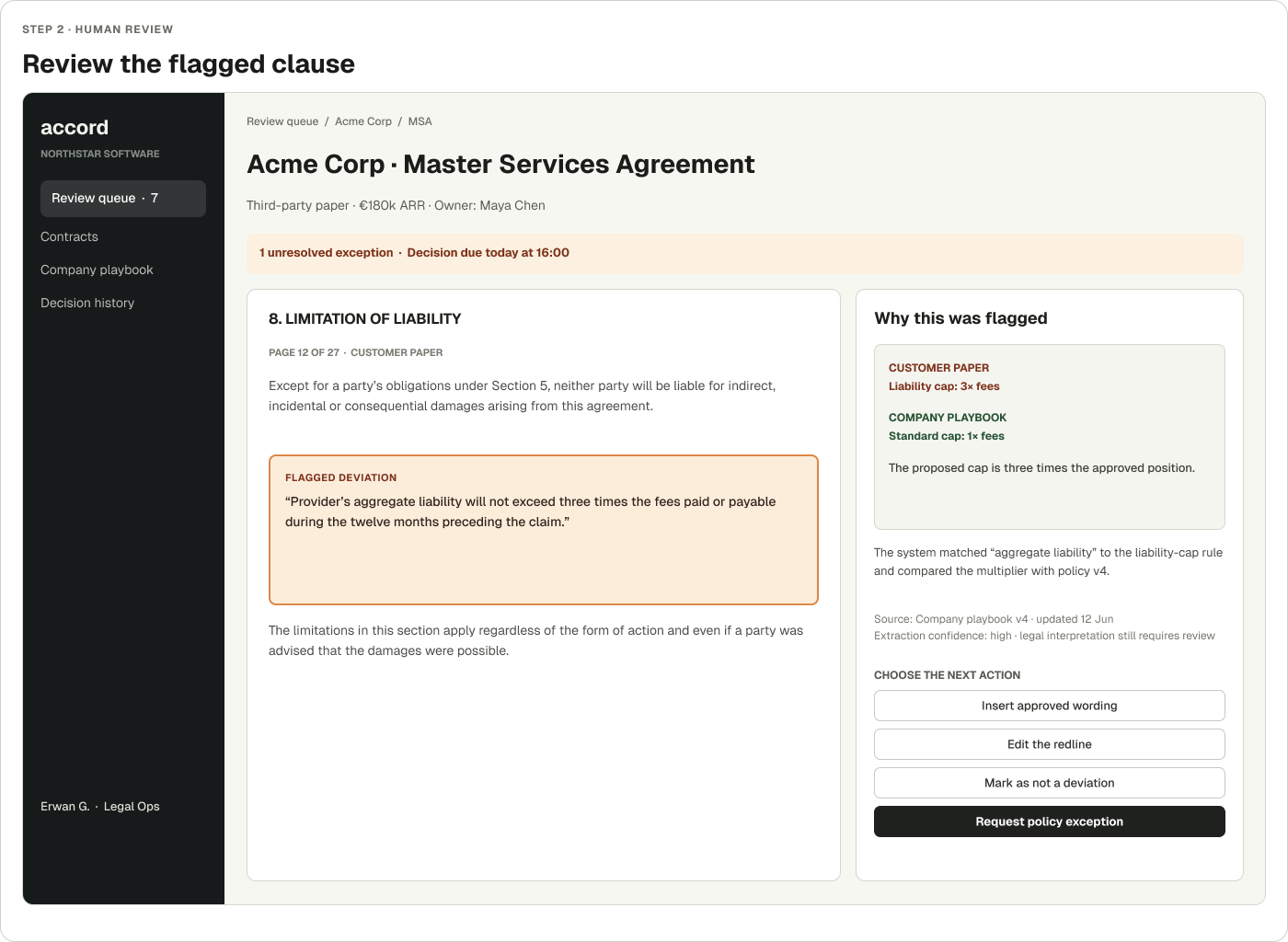
The early frames checked the sequence and information order. They also exposed missing evidence and reviewer disagreement as product states.
Exploration
I moved to high fidelity only after the workflow exposed the actors, information and failure states the interface needed to support.
A simple flow separated reviewer, approver and policy owner, then identified the decision record as the final output.
The clause sits beside policy and precedent. The reviewer adds the rationale and proposed fallback before requesting approval.
Weak evidence, missing context and reviewer disagreement route the case to stronger evidence or a named person.
Solution
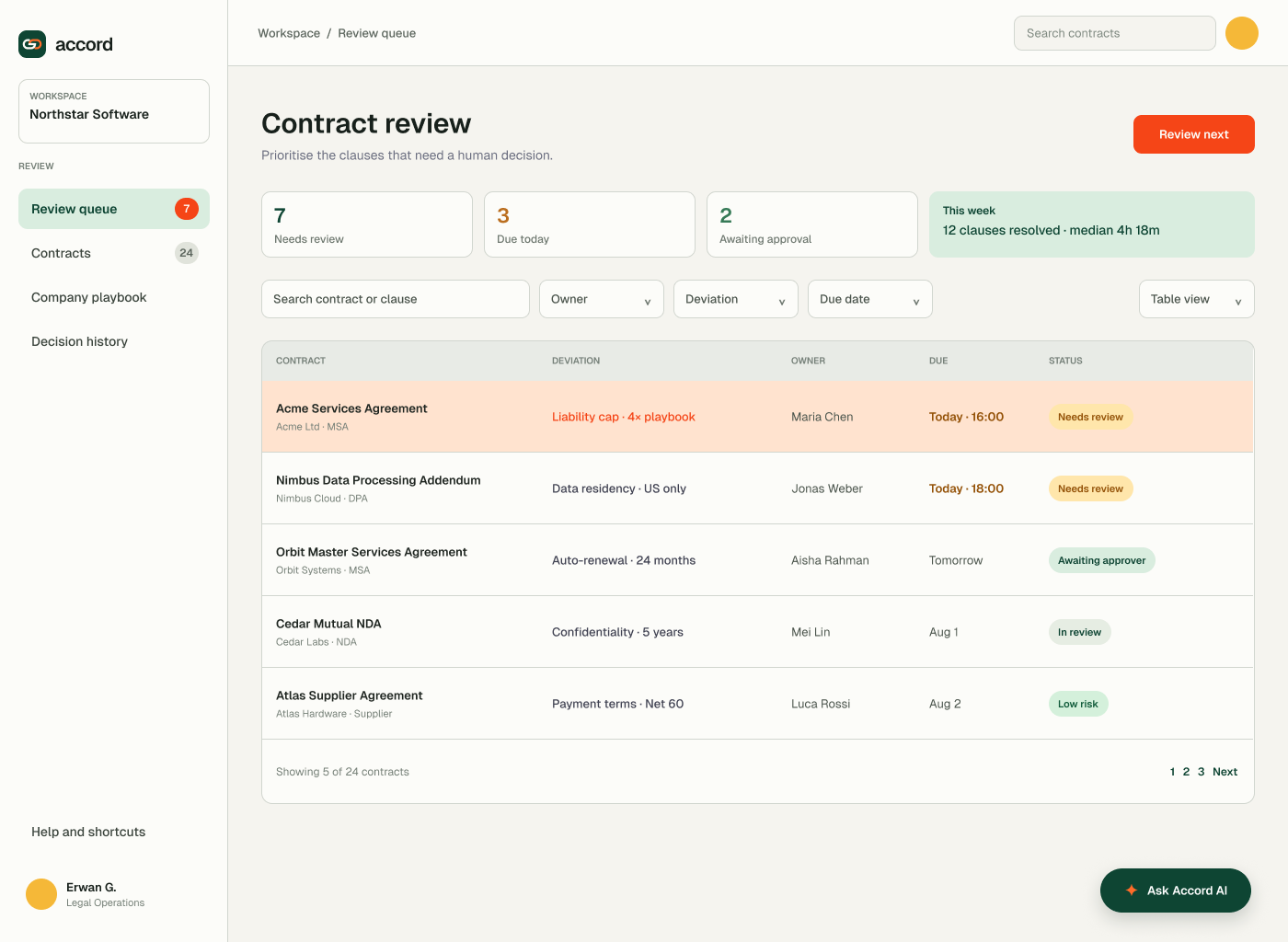
The queue shows deviation, risk, owner, due date and status before a contract is opened.
Each row has one primary risk label. Metadata stays neutral and orange is reserved for the deviation that needs action.
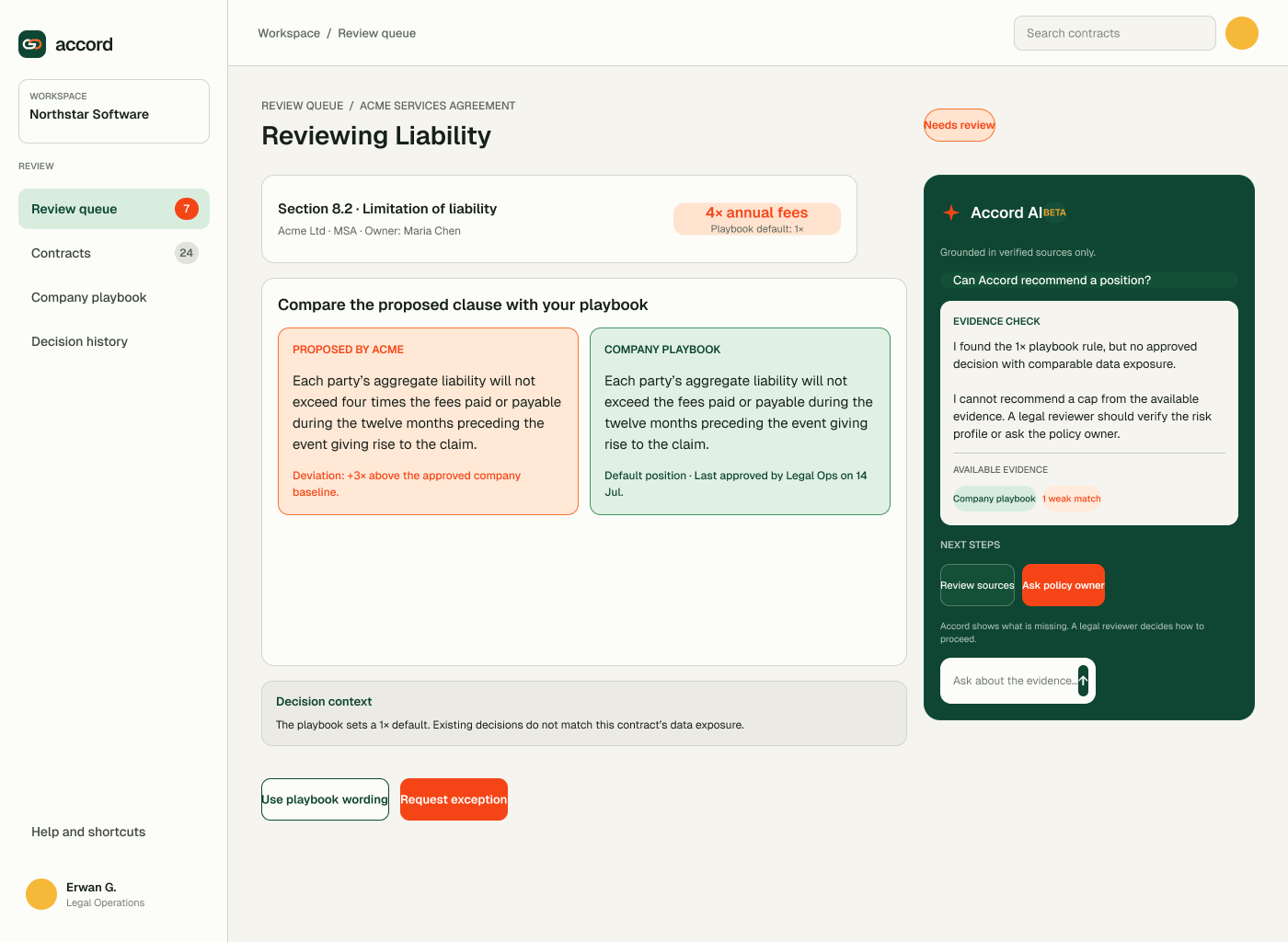
Proposed wording and company guidance share one working view.
The three-column desktop layout would need a dedicated focus mode on narrower screens.
The request captures why the exception matters, the proposed fallback and who needs to decide. Missing context is visible early.
Required fields make requests comparable. Free text leaves room for cases the form did not anticipate.
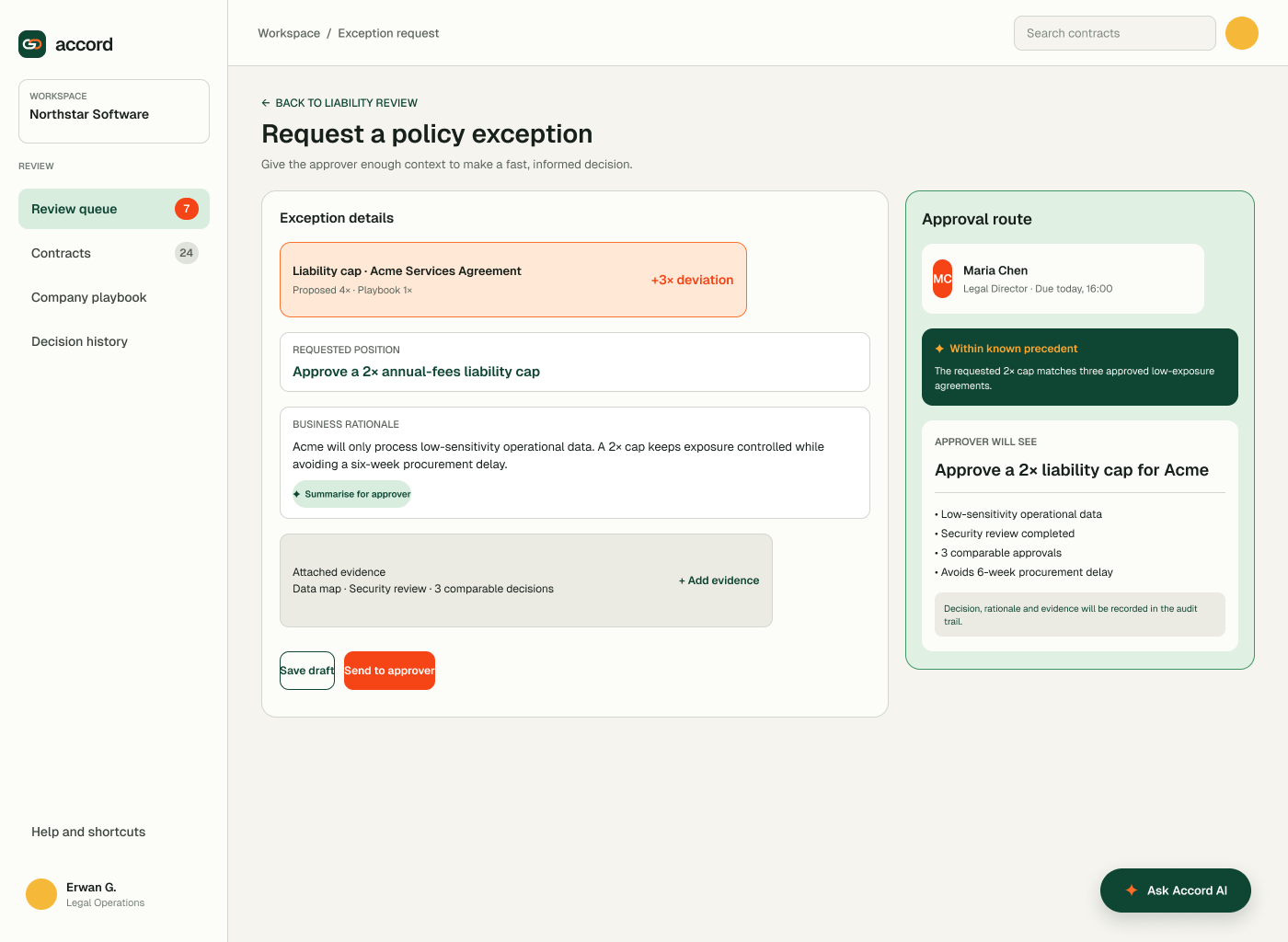
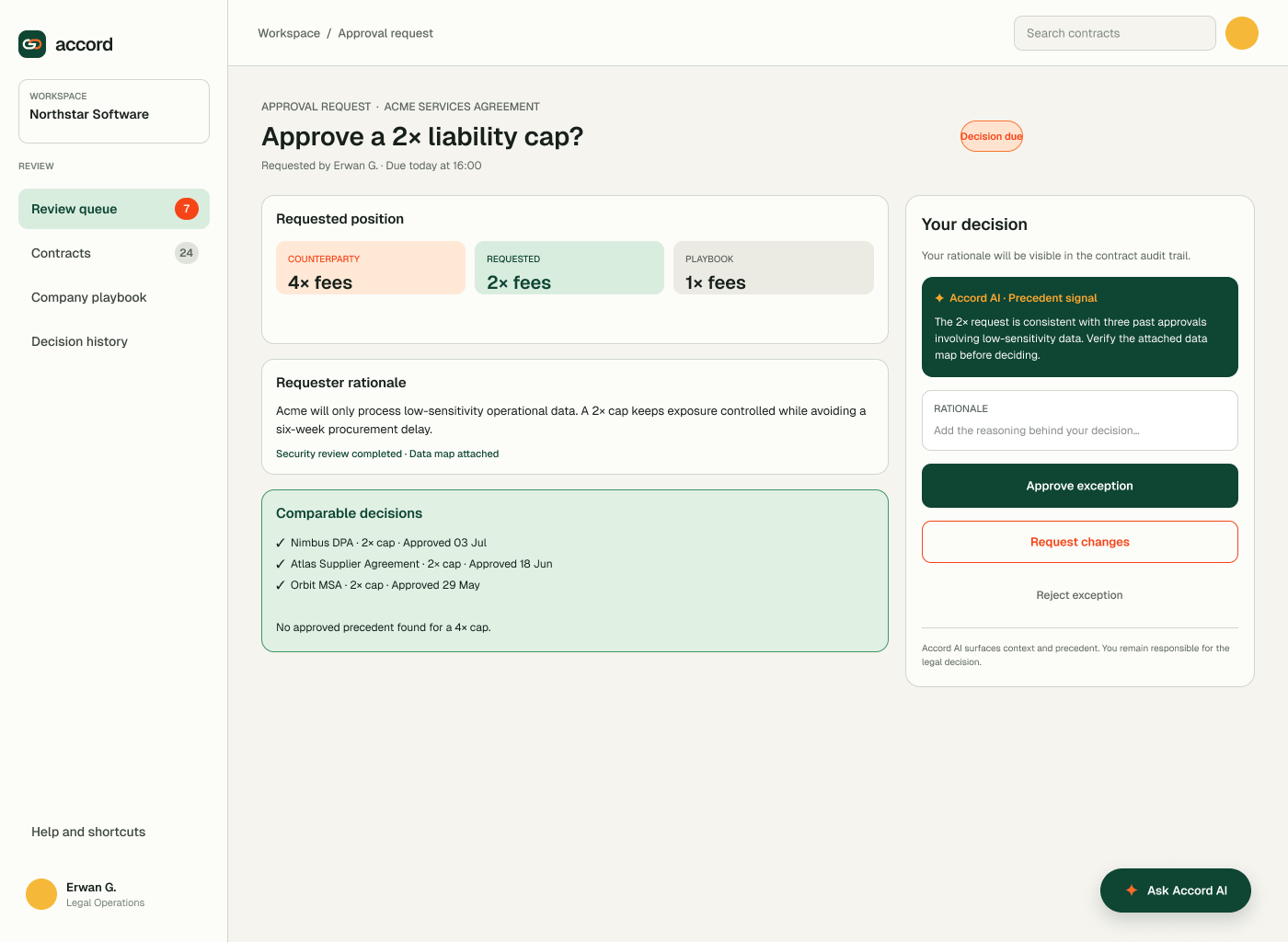
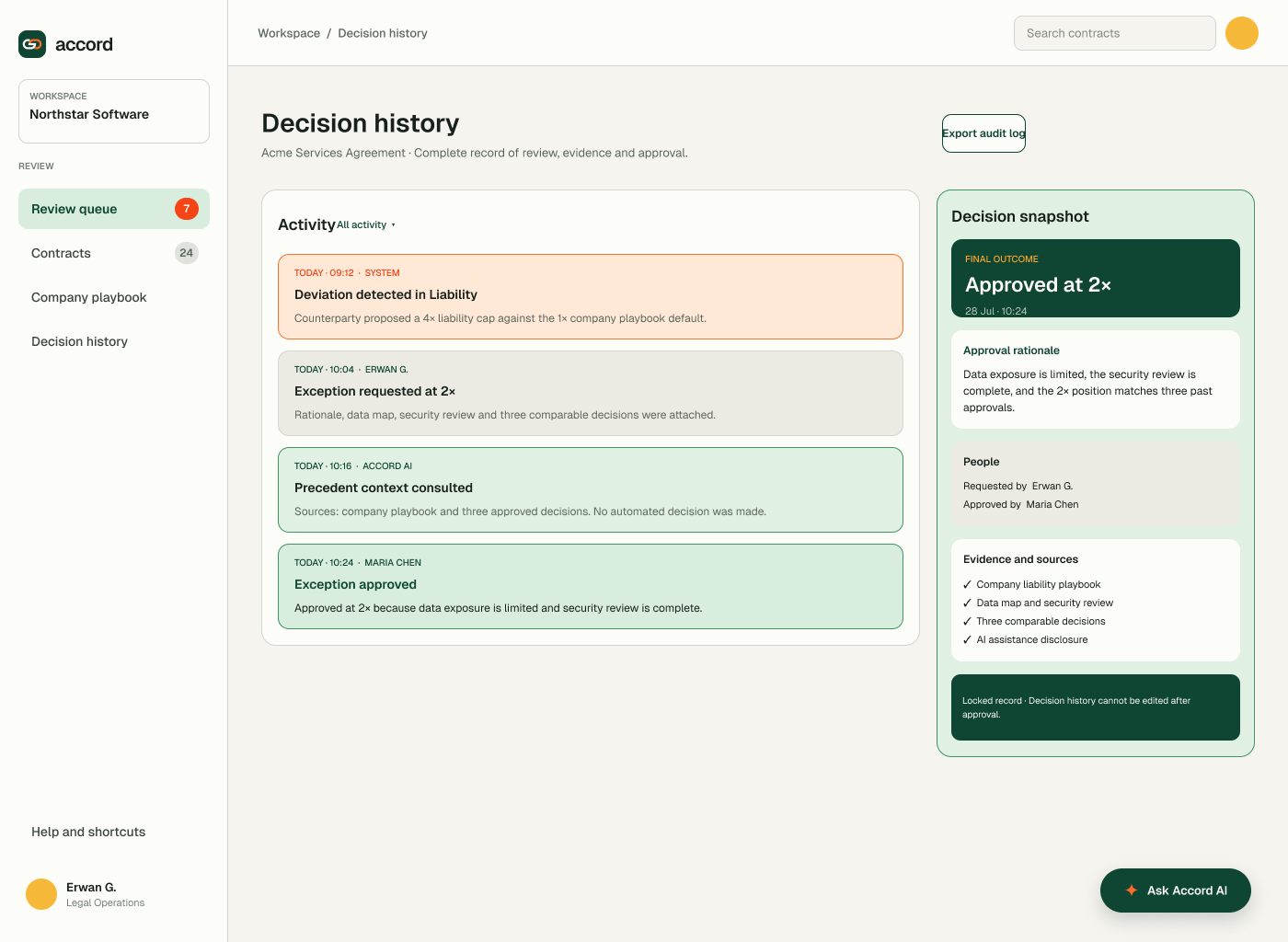
The approver sees the relevant context before acting. The final decision is written to an audit timeline.
AI summarises sourced material and suggests a next step. A named person approves, and weak evidence pauses the recommendation.
Edge cases
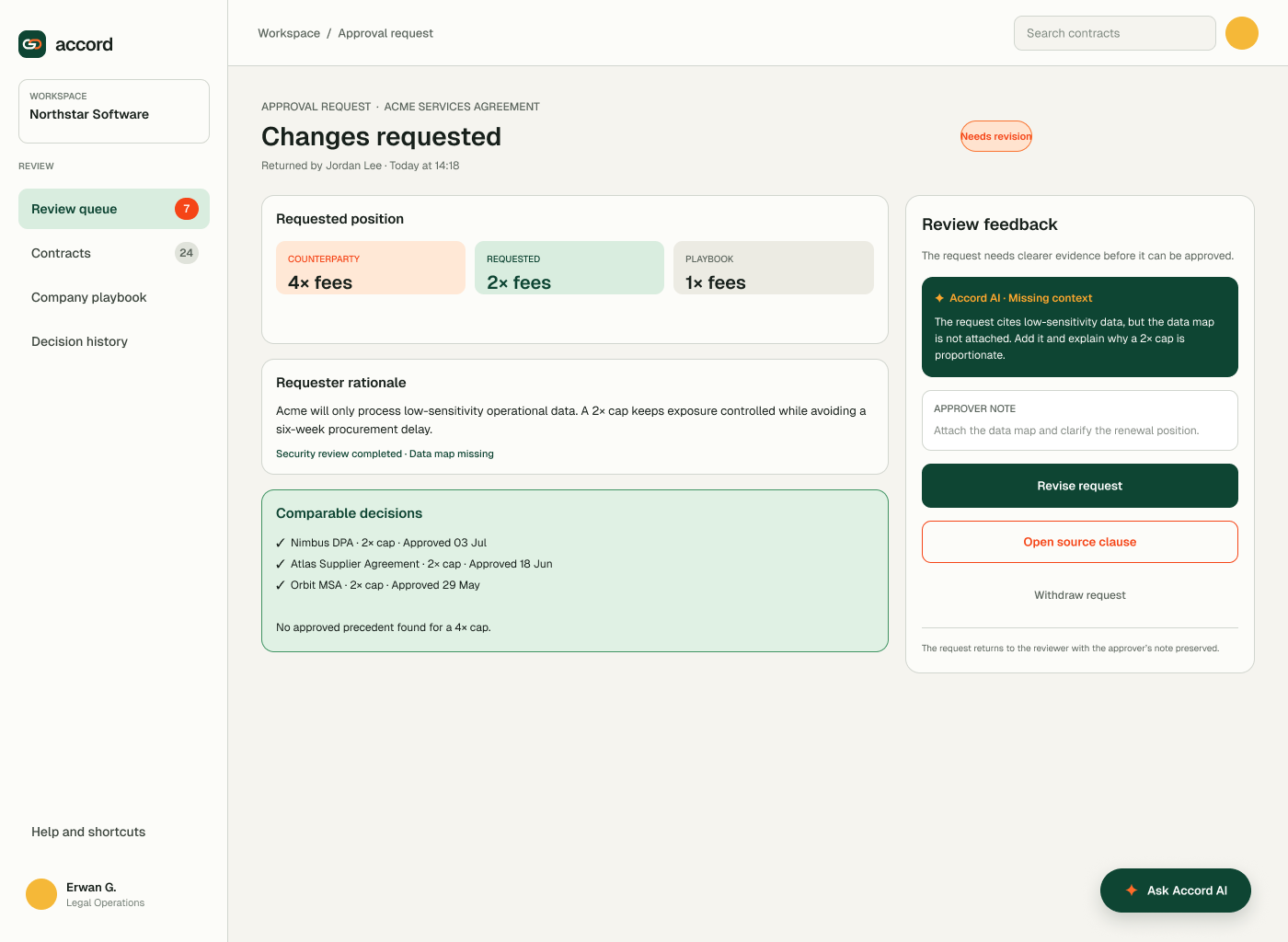
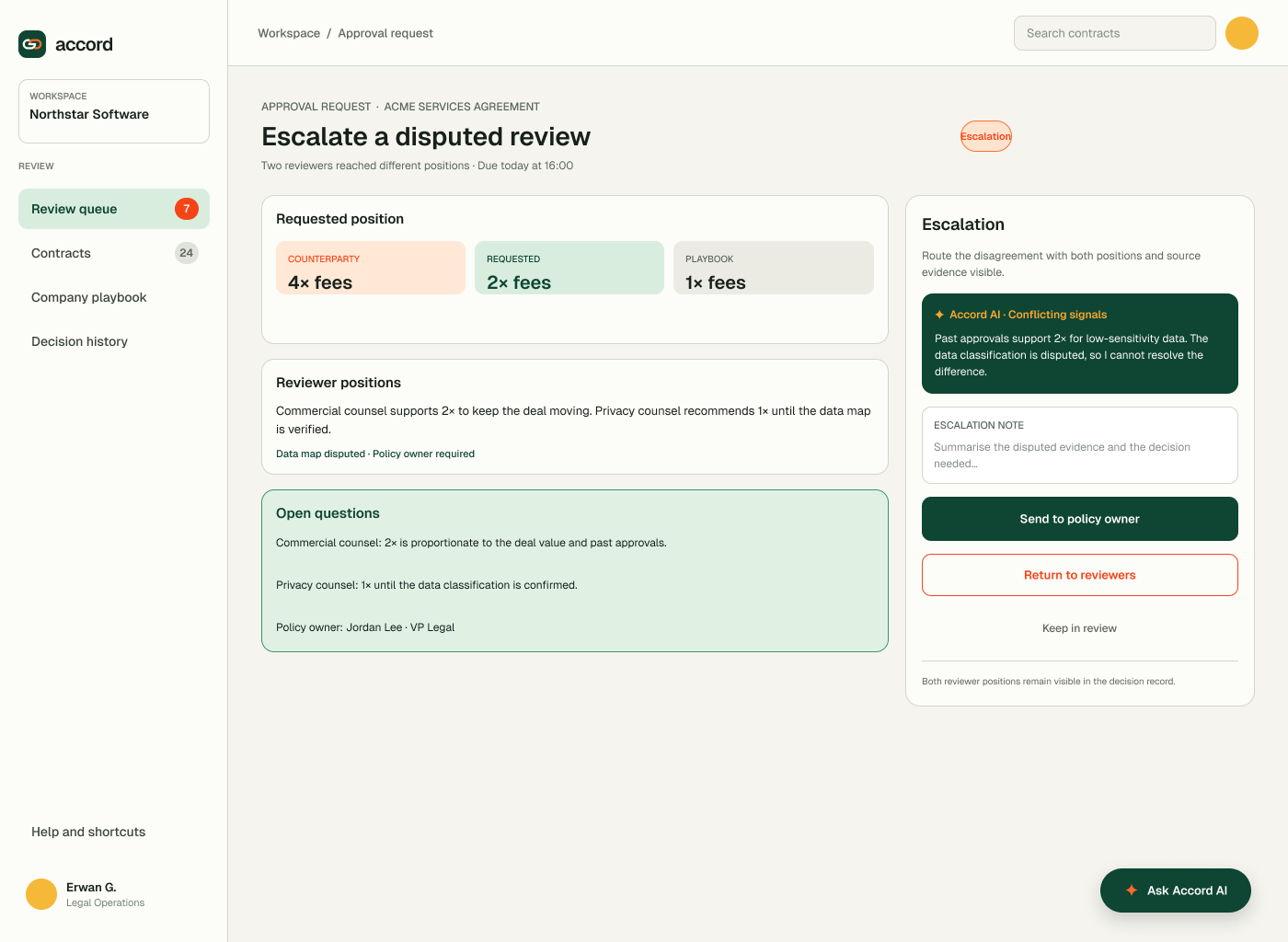
Weak evidence, missing context and reviewer disagreement each require a clear next step.
The reviewer is directed to stronger sources or the policy owner.
The approver returns the request with the missing context.
A named policy owner receives the disputed evidence before deciding.
Workflow outcome
The final screen keeps the rationale, evidence and approver in one record.
Validation plan
The concept has not been tested with Legal Ops practitioners. I would run six sessions. Each person would reconstruct a recent exception, then complete the same handoff in Accord.
Commercial counsel or contract managers compare the clause, policy and supporting evidence.
Sales, procurement or operations partners explain the business need and follow the decision.
Legal leaders or policy owners approve, reject or return the exception.
Identify the trigger, missing information, waiting points, people involved and record left after the decision.
Find the exception, compare the evidence, prepare the request, decide and recover the final rationale.
Next step
The first sessions would test the roles, required context and decision record before any impact claim.